Rakhi Special Sale Live Use "RAKHI10" Coupon Code
Rakhi Special Sale Live Use "RAKHI10" Coupon Code
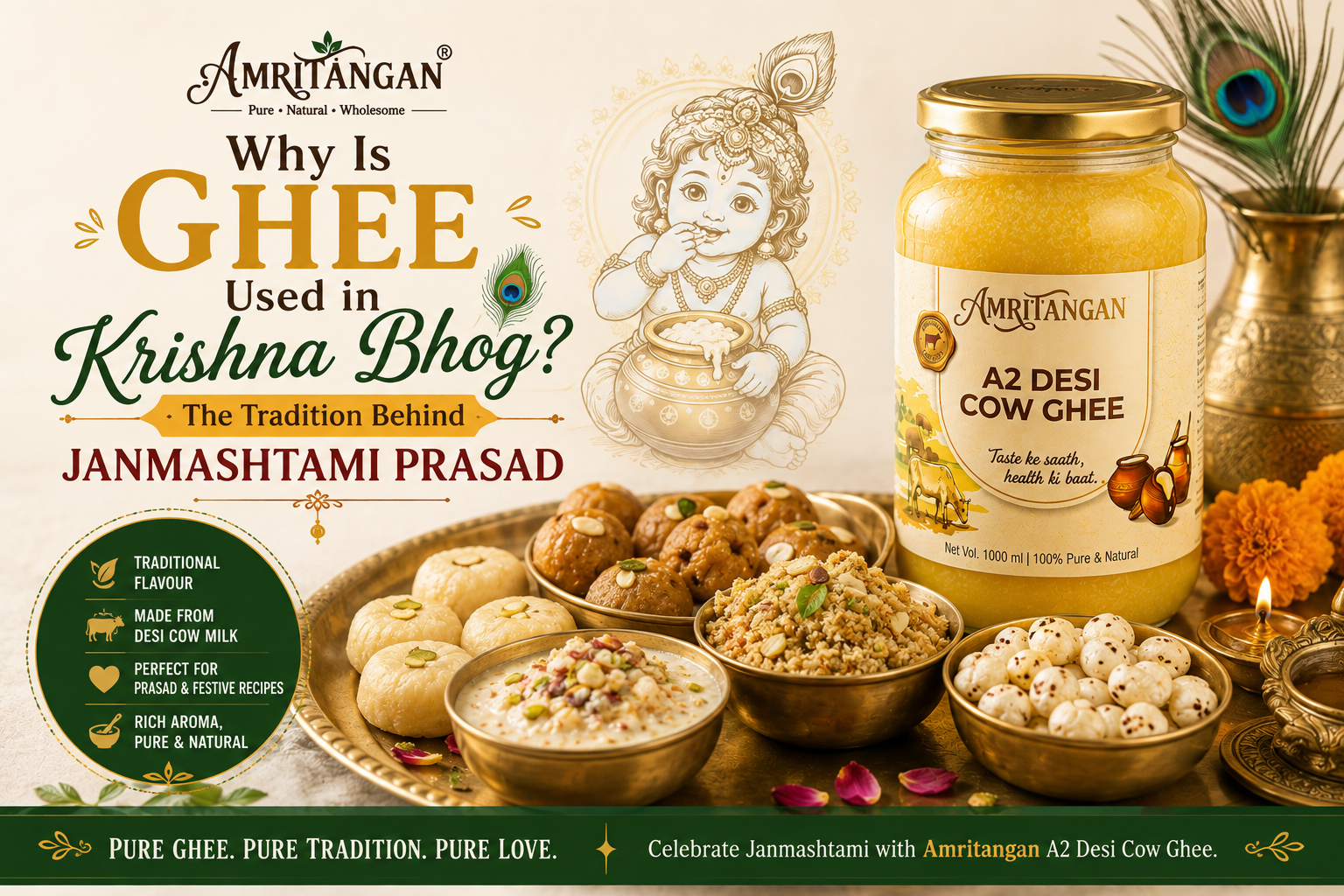
Janmashtami is a festival filled with devotion, family traditions, fasting, and of course, delicious Krishna bhog and prasad. From makhan-mishri and panjiri to ladoos, peda, kheer, and halwa, food has always been an important part of celebrating the birth of Lord Krishna.
One ingredient that appears in many traditional Indian festive preparations is ghee. It adds a rich aroma, smooth texture, and delicious taste to sweets and savoury dishes.
But why is ghee used in Krishna bhog? Is there a traditional reason behind it, and what type of ghee should you choose when preparing Janmashtami prasad at home?
Let’s explore the tradition, popular bhog ideas, and how Amritangan A2 Desi Cow Ghee can be part of your festive kitchen.
Ghee has been a familiar ingredient in Indian kitchens for generations. It is especially common in festive cooking because of its rich flavour and versatility.
When preparing bhog, ghee can be used for:
Unlike neutral cooking oils, ghee has a distinctive taste and aroma that can make simple ingredients feel more festive.
For many families, using ghee in Janmashtami preparations is therefore both a culinary tradition and a way of keeping familiar Indian food traditions alive.
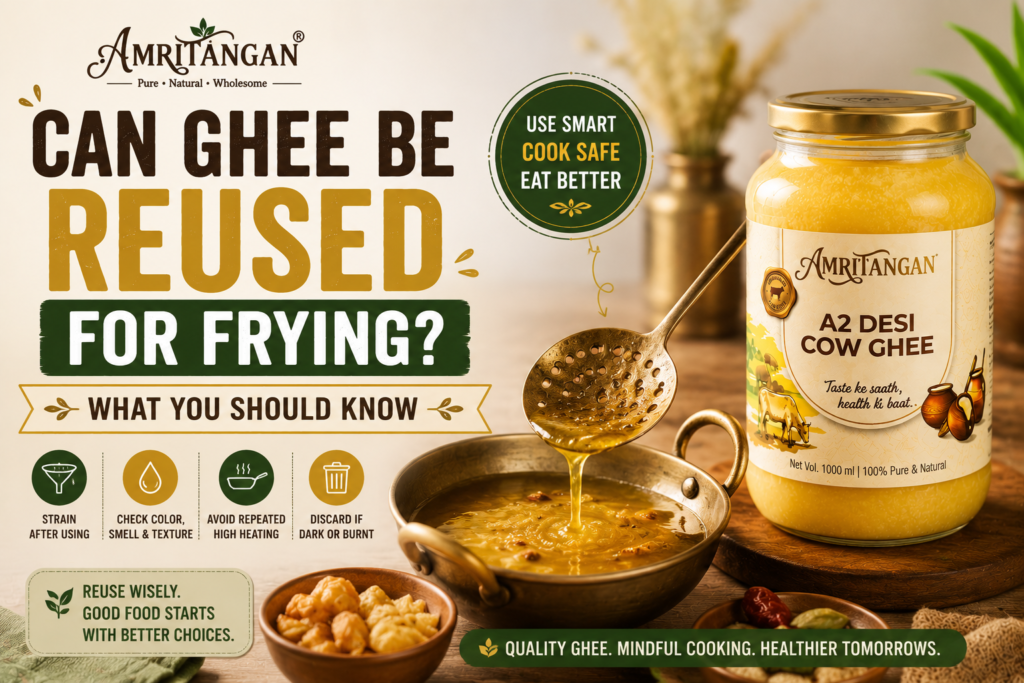
Read More – Can Ghee Be Reused for Frying? What You Should Know
When we think about Lord Krishna, dairy foods naturally come to mind.
Krishna’s childhood stories are closely associated with makhan, milk, dahi and other dairy foods. This cultural connection is one reason dairy-based foods continue to have a special place in many Janmashtami celebrations.
Different families and regions follow different traditions. Some prepare makhan-mishri, while others make panjiri, peda, kheer, ladoos or other homemade sweets.
The exact bhog can vary, but the idea remains the same: prepare food with care and offer it as part of the celebration.
When preparing food for a festival, ingredient quality matters. Since ghee is often an important part of traditional sweets and bhog, choosing a good-quality ghee can make a noticeable difference to the final taste and aroma.
Here are a few things to consider.
Look for ghee made with a clear ingredient profile and from a source you trust.
A good ghee should have a pleasant natural aroma and should work well for the type of cooking you are doing.
If you prefer traditional food-making practices, you may also want to understand how your ghee is produced.
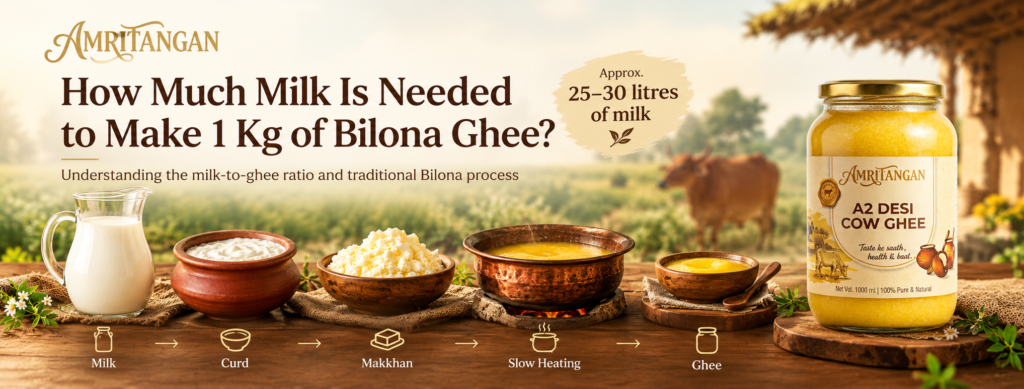
For example, the Bilona method is a traditional process associated with making ghee from cultured curd. You can learn more about the Bilona method and why it makes A2 ghee different.
Different Janmashtami recipes use ghee differently.
You may need ghee for roasting:
For this reason, a ghee with a pleasant aroma and rich flavour can be a useful ingredient for festive cooking.
If you’re planning your Krishna bhog at home this Janmashtami, here are some traditional-inspired ideas to consider.
Dhaniya panjiri is one of the most popular preparations associated with Janmashtami celebrations in many Indian households.
It is generally prepared using roasted coriander powder along with ingredients such as sugar, nuts, dry fruits and ghee.
Ghee helps roast the ingredients and brings together their flavours.
You can adjust the sweetness and ingredients according to your family’s traditional recipe.
Panjiri is a versatile preparation and can be made in several ways.
A simple version may include roasted flour, ghee, sugar, nuts, seeds and dry fruits.
The key to good panjiri is controlled roasting. The ingredients should be cooked patiently rather than exposed to very high heat.
The result is a fragrant preparation that can be served as part of the festive bhog.
Atta halwa is another simple homemade preparation that works beautifully for festive occasions.
The basic ingredients are:
The flour is roasted in ghee until it develops a pleasant aroma and colour. Sugar and liquid are then added carefully to create the desired consistency.
For Janmashtami, it can be prepared fresh and served as part of the bhog.
Besan ladoos are a classic Indian sweet and a popular choice for festivals.
The basic process involves slowly roasting besan in ghee before adding powdered sugar and flavourings such as cardamom.
The roasting stage is particularly important. Rushing it can leave the besan undercooked, while excessive heat can burn it.
Once the mixture cools slightly, ladoos can be shaped and decorated with chopped nuts.
Makhana is another ingredient commonly enjoyed during fasting and festive occasions.
For makhana kheer, the makhana can first be lightly roasted and then cooked with milk, sugar and cardamom.
A small amount of ghee can be used while roasting the makhana, adding a pleasant richness to the preparation.
This makes it a delicious option for families looking for a milk-based bhog.
Peda is a traditional milk-based sweet that can be prepared at home using ingredients such as milk solids, sugar, cardamom and ghee.
Its soft texture and rich flavour make it suitable for festive occasions.
Homemade peda also allows you to control the sweetness and choose the ingredients according to your family’s preferences.
If you want something quick and festive, dry fruit ladoos are another option.
You can combine ingredients such as:
Ghee can be used to lightly roast the nuts and bring the mixture together, depending on the recipe.
These ladoos can be shaped into small portions and included in a festive bhog platter.
Using the right technique is just as important as choosing good ingredients.
When roasting flour, besan, nuts or other ingredients, use moderate heat and stir regularly.
This helps prevent burning and gives the ingredients time to develop their flavour.
Ghee can handle normal cooking temperatures, but unnecessarily overheating any cooking fat can affect its flavour and quality.
If the ghee starts smoking, reduce the heat and reassess the cooking process.
Since prasad is prepared for sharing and offering, maintaining kitchen hygiene is important.
Use clean utensils and make sure they are properly dry before adding ghee.
Festive cooking can easily result in excess food. Try to prepare a quantity that suits your family and guests.
Freshly prepared prasad is generally the best choice for serving.
Janmashtami traditions differ from one family and region to another.
Some families observe a strict fast, while others follow different food rules. Some prepare a large bhog platter, while others keep the offering simple.
There is no need to make your preparation complicated. The tradition and intention behind the celebration are what make it special.
For many Indian families, festivals are a time to return to traditional flavours and homemade recipes.
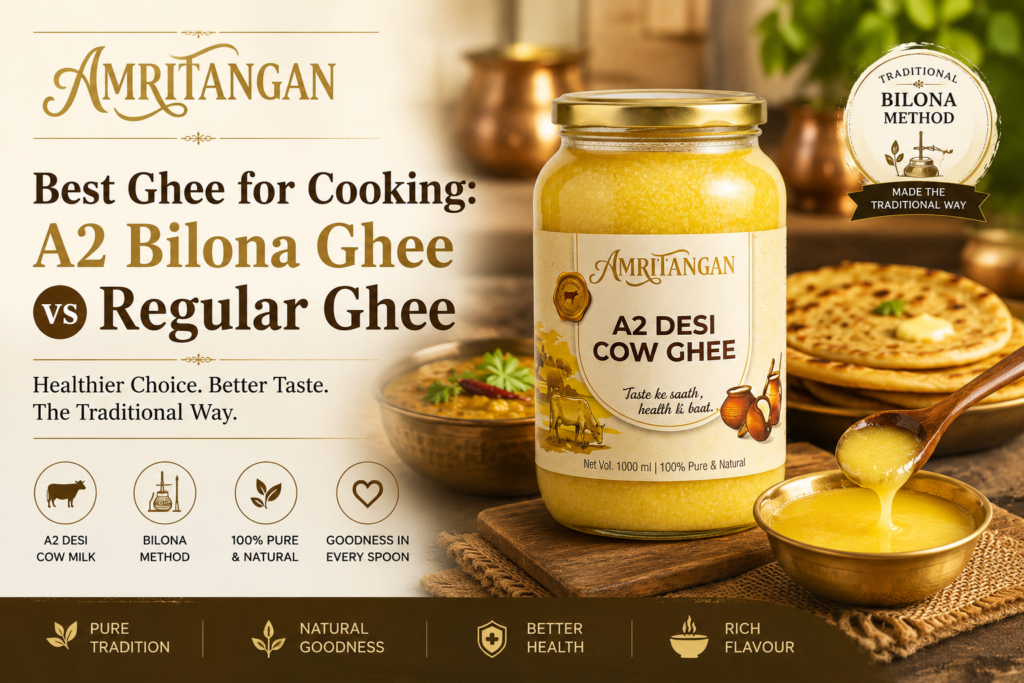
This is where Amritangan A2 Desi Cow Ghee fits naturally into the festive kitchen.
Amritangan focuses on traditional food products and offers A2 Desi Cow Ghee for everyday cooking as well as special occasions.
Its rich aroma and flavour make it suitable for recipes such as:
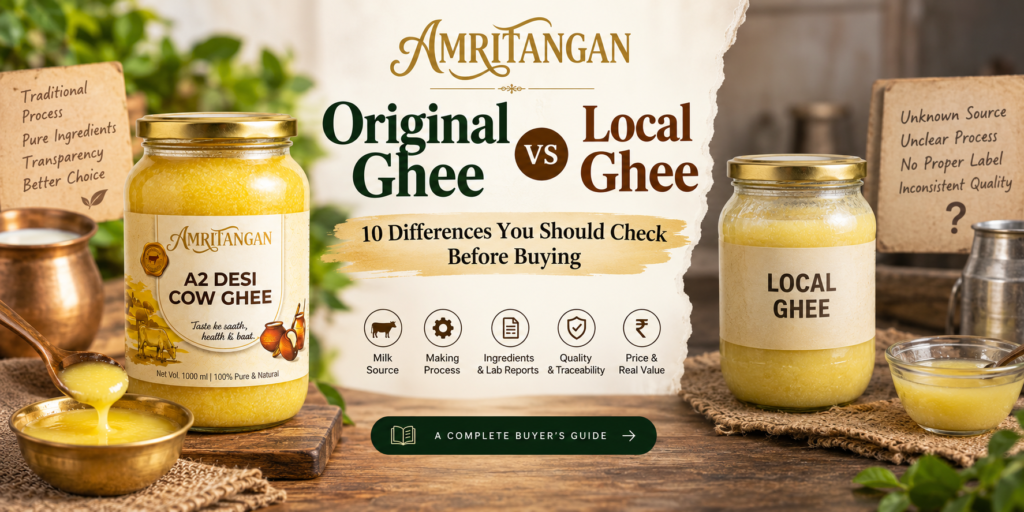
If you’re interested in understanding what you’re paying for when choosing a traditional ghee, you can also read our guide on A2 Bilona Ghee.
The goal isn’t simply to add more ghee to festive food. It is about choosing ingredients thoughtfully and enjoying traditional recipes in moderation.
A beautiful bhog does not have to be complicated.
Here are some simple tips for preparing Janmashtami prasad at home:
Keep your flour, sugar, nuts, spices and other ingredients measured before you begin.
Whether you’re preparing panjiri, halwa or ladoos, slow and controlled roasting can help develop better flavour.
Prepare prasad as close to serving time as practical and store leftovers properly.
Prepare portions according to the number of people you expect.
Janmashtami is a wonderful opportunity to involve children and family members in traditional cooking, where appropriate.
From preparing ladoos to arranging the bhog thali, small activities can turn food preparation into a memorable family tradition.
There isn’t one universal Janmashtami menu followed by every family.
However, foods commonly associated with Krishna and Janmashtami celebrations include:
The exact selection depends on regional customs, family traditions and whether the household is observing a fast.
Not every Janmashtami prasad recipe requires ghee.
Some preparations may be made without it, while others traditionally use ghee for roasting, cooking or flavour.
If your chosen recipe calls for ghee, using a good-quality ghee can add its characteristic aroma and richness.
The most important thing is to follow your recipe and your family’s traditional practices.
Ghee has an important place in many traditional Indian festive preparations because of its rich flavour, aroma and versatility. It can be used for making panjiri, halwa, ladoos, roasted makhana and several other Janmashtami foods.
When preparing Krishna bhog, choose ingredients you trust, cook with care, maintain good kitchen hygiene and follow your family’s traditions.
For families who enjoy the taste of traditional desi ghee, Amritangan A2 Desi Cow Ghee can be part of both festive recipes and everyday Indian cooking.
Ghee has a long history in Indian cooking and is commonly used in festive foods because it adds richness, aroma and flavour. It is particularly useful for roasting ingredients and preparing sweets such as panjiri, halwa and ladoos.
Choose a good-quality ghee from a trusted source. If you prefer traditionally prepared ghee, you can also look for products made using traditional processes such as the Bilona method.
Yes. A2 Desi Cow Ghee can be used in suitable recipes such as panjiri, halwa, ladoos, peda and other festive preparations.
Popular options include dhaniya panjiri, ghee panjiri, atta halwa, besan ladoos, dry fruit ladoos, peda and makhana-based preparations.
Fasting rules vary between families and traditions. If you’re fasting, follow the specific food guidelines you normally observe or those prescribed by your family tradition.
Krishna is traditionally associated with foods such as makhan, milk, dahi and mishri. Janmashtami celebrations may also include panjiri, kheer, peda, ladoos, fruits and other festive foods.
Janmashtami is about much more than preparing a festive meal. It is a celebration of tradition, devotion, family and togetherness.
From a simple bowl of makhan-mishri to homemade panjiri or ladoos, every family has its own way of preparing Krishna bhog.
Ghee has remained an important ingredient in many of these traditional preparations because of its rich taste, aroma and versatility.
This Janmashtami, bring your family together, prepare your favourite bhog with care, and enjoy the traditional flavours that make the festival special.
For traditional festive cooking, explore Amritangan A2 Desi Cow Ghee and bring the richness of desi ghee to your Janmashtami kitchen.
Happy Janmashtami from Amritangan! 🦚🙏
No account yet?
Create an AccountNeed help? Our team is just a message away


One thought on “Why Is Ghee Used in Krishna Bhog? The Tradition Behind Janmashtami Prasad”